전 대륙에서 시장조사와 여론조사를 하는 글로벌 네트워크 WIN(Worldwide Independent Network of Market Research)은 매년 건강, 환경, IT 등 여러 분야 현안에 관해 다국가 조사를 하고 있습니다. WIN Worldviews Survey 2025는 2024년 12월~2024년 2월 39개국 성인을 대상으로 했습니다.
지난번 〈의약품과 백신〉에 이어 오늘은 성평등 관련 인식을 전합니다.
성평등(Gender Equality) 관련 인식: WIN 다국가 조사
→ 한국+세계 조사 결과 파일 다운로드(PDF)
/ 세계 조사 개요
· 2024년 12월~2025년 2월 39개국 성인 총 34,946명 전화/온라인/면접조사(주제별 참여국 상이)
/ 한국 조사 개요
· 조사기간: 2025년 1월 16~24일
· 표본추출: 사회연구패널★에서 성·연령·지역별 층화 추출
(한국갤럽이 무선전화 RDD 방식으로 구축·운영하는 확률 기반 조사패널)
· 응답방식: 모바일조사(조사대상자에게 문자메시지 발송, 자기기입식 웹조사)
· 조사대상: 전국 만 19~79세 1,085명
· 표본오차: ±3.0%포인트(95% 신뢰수준)
· 문자 발송 대비 응답 완료율: 36.5%(총 2,973명 중 1,085명)
· 의뢰처: 한국갤럽-WIN 자체 조사
/ 조사 문항
→ 영역별 성평등 성취 여부: 일터·직장, 정치, 가정
→ 어제 한 집안일(복수응답)
→ 정신적·신체적 폭력 피해 | 성희롱 피해 경험
→ (영문) WIN commentary
→ 한국 응답자 특성표
요약
[2024년 12월~2025년 2월 39개국 성인, 성평등 성취 동의율]
가정에서 69%, 일터·직장에서 60%, 정치에서 51%
· 대체로 남성이 여성보다 더 성평등한 사회에 산다고 느껴
· 한국, 다른 나라보다 남녀 간 시각차 큰 편
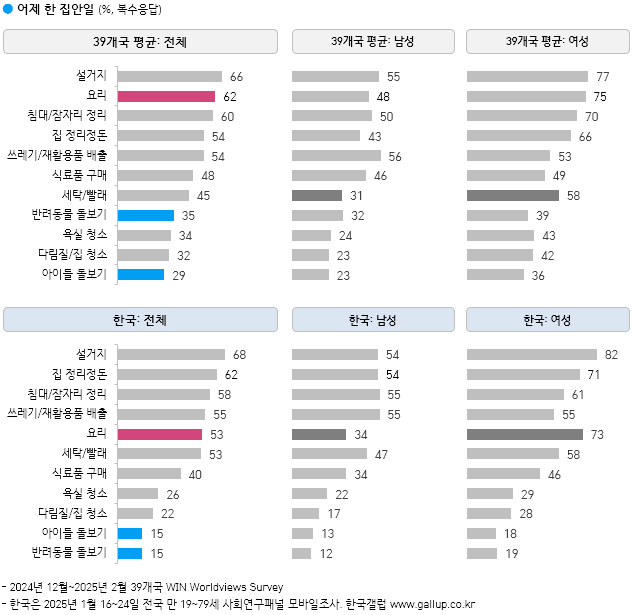
[어제 한 집안일] 설거지 66%, 요리 62%, 침대/잠자리 정리 60%,
집 정리정돈, 쓰레기/재활용품 배출 54%, 식료품 구매 48%, 세탁/빨래 45%,
반려동물 돌봄 35%, 욕실 청소 34%, 다림질/집 청소 32%, 아이 돌봄 29%
· 39개국 대부분 여성이 남성보다 더 많은 가사 노동 부담
· 11가지 집안일 중 쓰레기 배출, 식료품 구매만 남녀 비슷한 수준
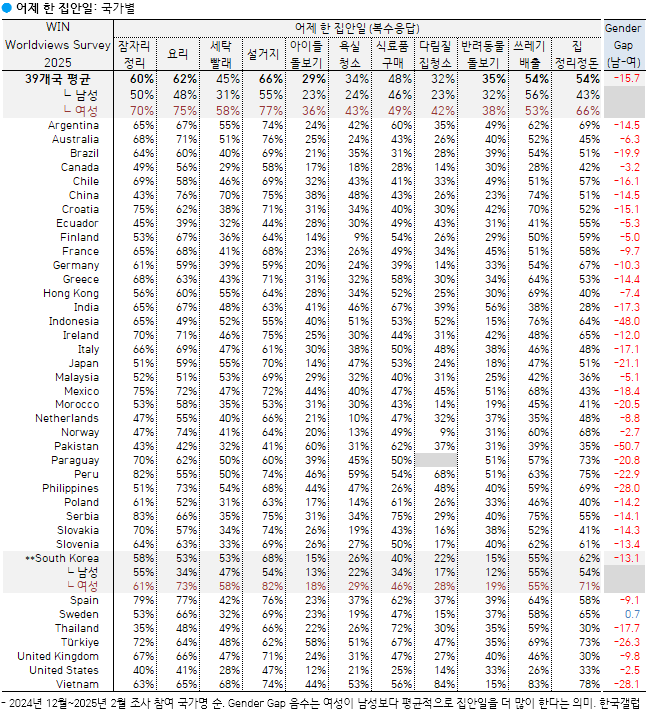
· 성별 가사 노동 격차 가장 작은 국가는 스웨덴, 미국, 노르웨이, 캐나다 순
· 국가별 가정 내 성평등 성취 인식과 성별 가사 노동 분포는 별개, 상관성 없어
[정신적·신체적 폭력] 남성보다 여성, 저연령일수록 더 많이 경험
조사 결과
────────────
영역별 성평등 성취 여부
────────────
2023년 12월~2024년 2월 39개국 성인, 성평등 성취 동의율:
가정에서 69%, 일터·직장에서 60%, 정치에서 51%
- 대체로 남성이 여성보다 더 성평등한 사회에 산다고 느껴
- 한국, 다른 나라보다 남녀 간 시각차 큰 편
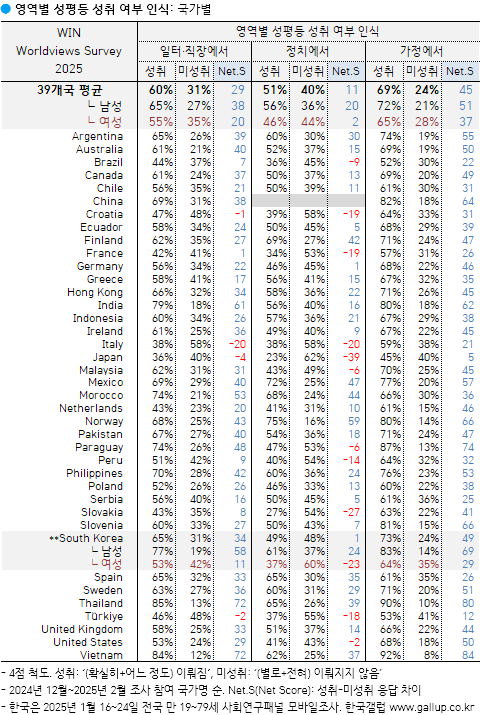
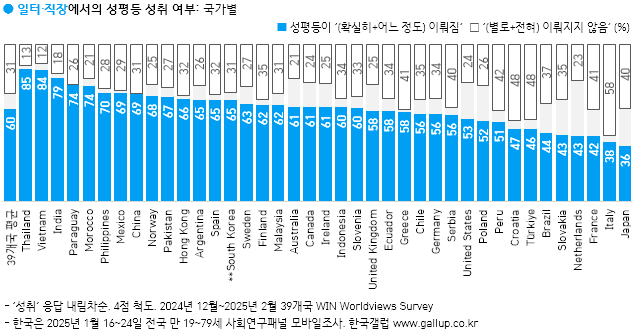
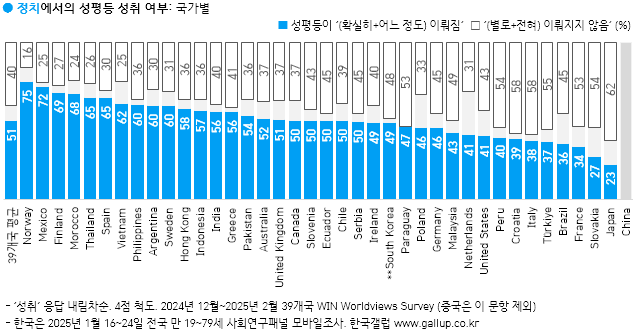
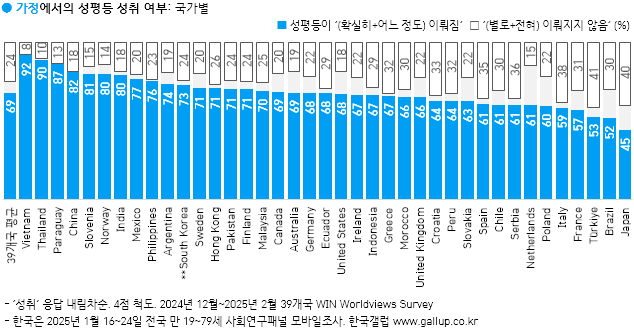
글로벌 조사 네트워크 WIN이 2024년 12월~2024년 2월 39개국 34,946명에게 성평등이 얼마나 이뤄졌는지에 대한 주관적 인식을 일터·직장, 정치, 가정 3개 영역별로 물었다(4점 척도). 그 결과 39개국 성인 중 69%가 자국의 가정에서 '성평등이 (확실히+어느 정도) 이뤄졌다'고 답했다. 일터·직장(이하 '직장')에서 '성평등이 이뤄졌다'(이하 '성취')는 응답은 60%, 정치 영역에서는 그보다 낮은 51%로 나타났다.
◎ 타이와 베트남은 직장과 가정에서의 성평등 성취 응답이 모두 80%를 웃돌았고, 노르웨이는 정치 영역에서 그 비율이 75%로 가장 높았다. 반면 일본(가정 45%, 직장 36%, 정치 23%)은 세 영역 모두 39개국 중 최하위권이다.
◎ 이 조사는 39개국 성인이 자국에서 성평등이 얼마나 이루어졌다고 느끼는지에 대한 인식만 다룬다. 유엔개발계획(UNDP)의 성불평등지수(GII)나 세계경제포럼(WEF)의 성별격차지수(GGI) 등은 주로 국가 통계, 법적·경제적 제도와 권리 등 여러 측면을 포괄하여 산출된다는 차이가 있다. 즉, 개인이 느끼는 자국의 성평등 정도가 반드시 그 나라의 객관적 성평등 수준을 의미하는 것은 아님에 주의해야 한다.
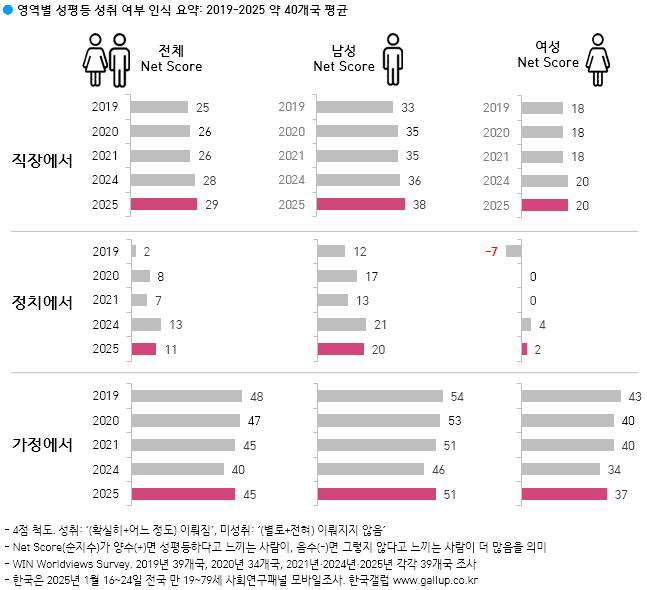
◎ 국가별, 응답자 특성별 성평등 성취 여부 인식 비교를 좀 더 쉽게 하기 위해 순(純)지수(Net Score: 성취-미성취 응답 차이, 수치가 클수록 더 성평등하다고 느낌) 기준으로 보면 39개국 전체 평균은 가정 45, 직장 29, 정치 11 순이다.
◎ 주요 3개 영역 성평등 성취 순지수를 성별로 보면 정치에서 남성(20)과 여성(2) 차이가 18, 직장(남성 38, 여성 20)에서도 18, 가정(51, 37)에서는 14다. 즉, 전반적으로 남성이 여성보다 더 성평등한 사회에 산다고 느낀다. 이는 과거 조사에서도 일관된 경향이다. 지난 몇 년간 직장(2019년 성취 순지수 25 → 2025년 29)과 정치(2→11) 영역에서는 소폭 상승했으나, 같은 기간 가정(48→45)에서는 답보했다.
──
한국 가정에서의 성평등 성취 73%, 직장 65%, 정치는 49%
- 남성은 한국 사회 성평등 성취 수준 고평가, 여성은 저평가
- 저연령일수록 성별 인식 차 확대, 20대 남녀 가장 양극적
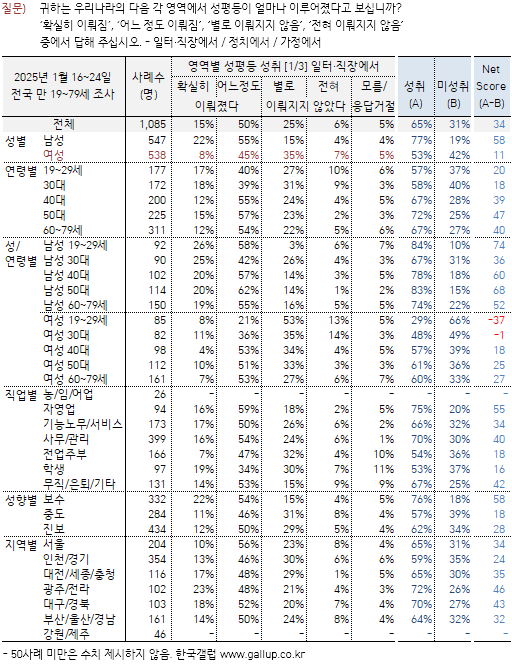
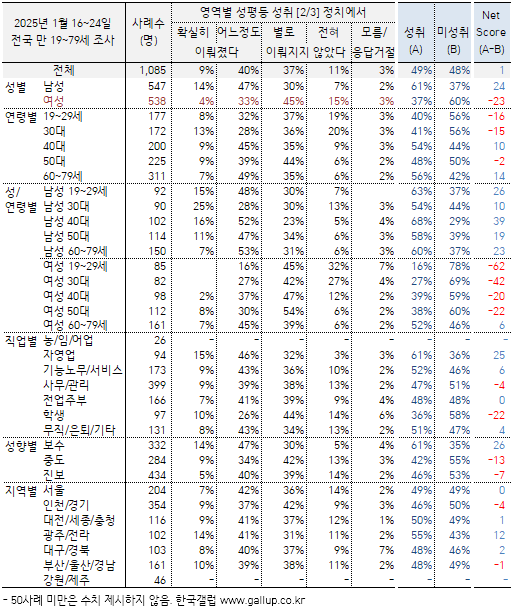
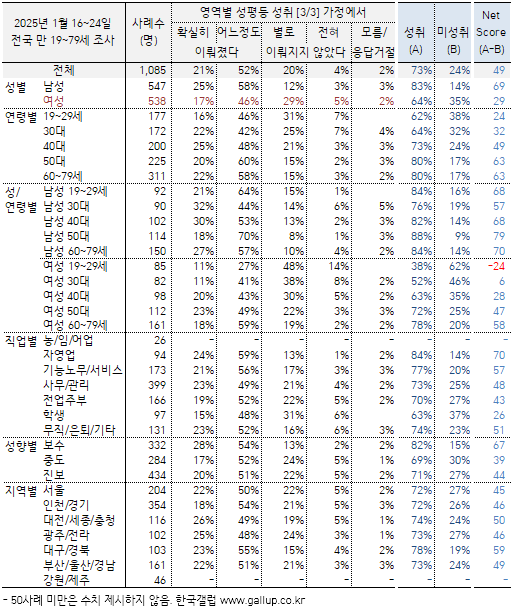
한국 조사는 2025년 1월 16~24일 전국 만 19~79세 1,085명을 대상으로 했다. 그 결과 한국인의 영역별 성평등 성취 응답은 가정에서 73%, 직장에서 65%, 정치에서 49%로 나타났다. 3개 영역 모두 조사 참여국 평균에 가깝다.
하지만 남성과 여성을 각각 살펴보면 사정이 다르다. 한국 남성은 우리 사회의 성평등 수준을 39개국 남성 평균보다 더 높게, 한국 여성은 39개국 여성 평균보다 더 낮게 평가했다(남성/여성 영역별 성평등 성취 순지수: 직장 58/11, 정치 24/-23, 가정 69/29).
◎ 저연령일수록 성별 인식 차가 크고, 특히 20대에서 가장 양극적이다(20대 남성/여성 영역별 성평등 성취 순지수: 직장 74/-37, 정치 26/-62, 가정 68/-24, 30대 남성/여성: 직장 36/-1, 정치 10/-42, 가정 57/6). 참고로, 현재 20·30대는 정치적 성향 면에서도 상반한다. 20·30대 여성이 또래 남성보다 진보적이고, 60대 이상에서는 남녀 모두 보수 쪽으로 기운다(→ 데일리 연간 통합 2024).
────────────
어제 한 집안일
────────────
설거지 66%, 요리 62%... 다림질/집 청소 32%, 아이 돌봄 29%
- 39개국 대부분 여성이 남성보다 더 많은 가사 노동 부담
- 11가지 집안일 중 쓰레기 배출, 식료품 구매만 남녀 비슷한 수준
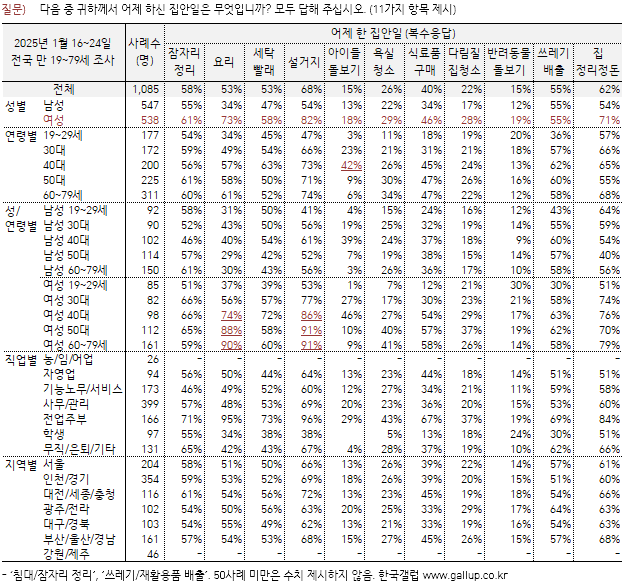
39개국 성인 열에 일곱(69%)은 가정에서의 성평등이 확실히 또는 어느 정도 이뤄졌다고 믿지만, 일상적으로 보면 여전히 여성이 남성보다 더 많은 가사 노동을 부담하고 있다. 11가지 집안일을 제시하고 어제 한 것을 모두 선택하게 한 결과(복수응답), 설거지 66%, 요리 62%, 침대/잠자리 정리 60%, 집 정리정돈, 쓰레기/재활용품 배출 54%, 식료품 구매 48%, 세탁/빨래 45%, 반려동물 돌봄 35%, 욕실 청소 34%, 다림질/집 청소 32%, 아이 돌봄 29% 순으로 나타났다. 이 중에서 쓰레기 배출과 식료품 구매만 남녀 비슷한 수준이며, 나머지는 여성이 더 많이 하는 것으로 파악됐다.
/ 성별 가사 노동 격차 가장 작은 국가는 스웨덴, 미국, 노르웨이, 캐나다 순
/ 국가별 가정 내 성평등 성취 인식과 성별 가사 노동 분포는 별개, 상관성 없어
39개국 중에서 집안일 실행률 성별 격차(11가지 집안일 평균 Gender Gap: 남성 실행률-여성 실행률, 음수가 클수록 여성이 남성보다 평균적으로 집안일을 더 많이 한다는 의미, 단위: %포인트)가 가장 작은 나라는 스웨덴(0.7), 미국(-2.5), 노르웨이(-2.7), 캐나다(-3.2) 순이며, 격차가 가장 큰 나라는 파키스탄(-50.7), 인도네시아(-48.0), 베트남(-28.1) 순이다.
◎ 국가별 가정 내 성평등 성취 인식과 성별 가사 노동 분포는 별개로, 거의 0에 가까운 상관성을 보였다. 예컨대 베트남은 시민 92%가 가정에서 성평등하다고 믿지만, 성별 가사 노동 격차는 39개국 평균을 크게 벗어났다. 이러한 괴리는 성평등 인식이 각국의 사회적, 문화적, 경제적 요인, 그리고 역사적 궤적에 따라서도 다를 수 있음을 보여준다.
────────────
폭력 피해 경험
────────────
'지난 1년간 신체적·정신적 폭력으로 고통받은 적 있다' 13%,
'지난 1년간 성희롱 당한 적 있다' 5%
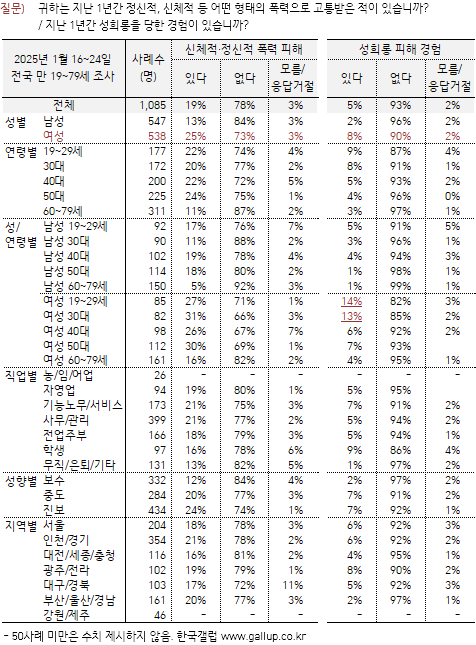
39개국 성인 중 지난 1년간 정신적·신체적 등 어떤 형태의 폭력으로 고통받은 적 있는 사람은 13%(남성 11%, 여성 14%), 성희롱 피해 경험자는 5%(남성 4%, 여성 7%)로 나타났다.
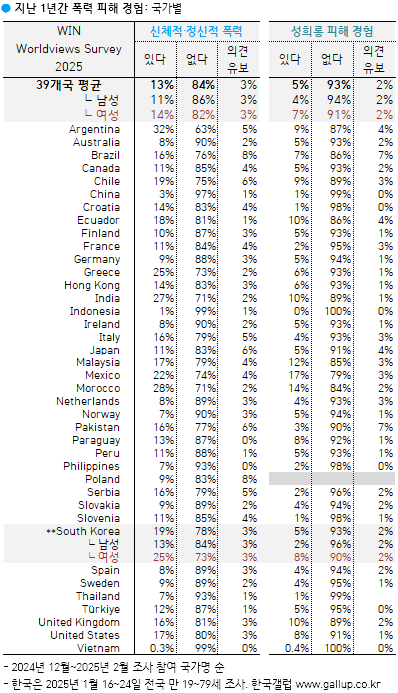
◎ 한국인 중에서는 정신적·신체적 폭력 피해 경험자 19%(남성 13%, 여성 25%), 성희롱 피해 경험자 5%(남성 2%, 여성 8%)다. 여성이 남성보다 폭력 피해, 성희롱 피해를 많이 겪었고, 특히 성희롱 피해 경험은 젊은 여성에게서 두드러졌다(여성 20대 14%, 30대 13%).
──────────────────
Women’s lived realities still lag behind despite positive perceptions
──────────────────
The Worldwide Independent Network of MR (WIN), the leading global association of independent market research and polling firms, has released its Worldviews Survey. This year’s survey captures the perspectives and beliefs of 34,946 individuals across 39 countries. WIN’s latest findings shed light on miscorrelation between perception of gender equality and behaviour, violence, and measures to promote women’s rights. The survey has tracked progress across all these markets over 6 years, since it began in 2019, and it assesses whether equal opportunities and rights are improving worldwide.
The summary of the findings is as follows:
1. Household chores are still being done by women
Despite 69% of people globally believing household equality has definitely or to an extent been achieved, the distribution of housework tells a different story. All chores are still predominantly done by women, except for ‘taking out the rubbish’ (the only thing done more frequently by men in 23 out of 39 countries; 56% men versus 53% women), and ‘groceries’ which is shared by both genders (46% men versus 49% women). ‘Laundry’ (in all countries, done more by women) and ‘Cooking’ (in 38 out of 39 countries done by women) showed the biggest gender gap at 27%. This is a stark contrast to high-end cuisine, where renowned chefs have been men historically. The findings underscore that traditional gender roles still dominate in domestic responsibilities.
Even in countries where gender equality is perceived as more advanced, housework remains unevenly distributed – just to a lesser degree. The smallest gender gaps are in Sweden (0.7%), the US (-2.5%), Norway (-2.7%), and Canada (-3.2%). On the opposite extreme are Pakistan where the gap is a staggering -50.7%, Indonesia (-48%), Vietnam (-28.1%, despite ranking highest in positive perception of household equality at 92%), the Philippines (-28%), and Thailand (-17.7%) who report the widest disparities.
2. Perceptions of gender equality do not translate to household behaviour
Perceptions of gender equality at home globally have slightly improved compared to 2024, but this shift is largely driven by men, while women remain less optimistic. People’s views on gender equality at home and in politics across the world remain consistent across age groups this year (varying by just 1% in positive views at home, and just 2% in politics across ages 18 to over 65). However, there is a negative correlation between age and positive perception that gender equality has been achieved at work. 63% of 18 to 24 year-olds globally believe it has been achieved, while only 50% of those over 65 do. All fields (at home, at work, in politics) generally increase with education, rising from 63% positive sentiment for home equality among those with no or basic education to 70% for those with a master’s degree or PhD. Interestingly, Vietnam (92%) and Thailand (90%) rank highest for perceived household equality, surpassing countries with strong gender equality reputations like Norway (80%) and Finland (71%).
However, when comparing these perceptions to actual household chore distribution, there is near-zero correlation (using Spearman analysis). This suggests that subjective beliefs about gender equality – whether at home, work, or in politics – do not reflect real-life behaviour. While Japan, which ranks lowest in gender equality perceptions in all fields, shows alignment between perception and household task division, countries like Pakistan, Indonesia, and Vietnam – despite their high rankings in perceived equality – have the largest gender gaps in housework. Conversely, Poland reports lower confidence in gender equality yet ranks well in shared domestic responsibilities. This disconnect underscores the need for further research on what influences perceptions of gender equality – how societal, cultural or economic factors affect perceptions, or whether the country’s historical trajectory regarding equality plays a role in shaping responses.
3. Concerns linger amidst decreased violence against women
Women reporting experiences of physical and/or psychological violence globally dropped from 20% in 2024 to 14% this year. However, this decline is partly due to the inclusion of countries with lower violence rates, such as China and Thailand (where 97% and 90%, respectively, answered ‘no’ when asked if they’ve suffered violence), Slovakia and Norway (88% of women reported no), while Nigeria – the highest-ranking country for violence against women in 2024 – did not participate this year. Similarly, reports of __ual harassment have fallen from 10% to 7%, influenced by the same factors.
Both violence and harassment are strongly age-related, with younger women most affected – a persistent trend since 2019. Amongst women aged 18–24, 18% report experiencing violence, and 16% have faced __ual harassment in 2025. These figures drop significantly as women age, with women over 65 reporting at 5% and 1%, respectively.
Country-specific trends further highlight the complexity of these issues. In Turkey, reports of violence increased from 13% in 2024 to 18% this year. There has been growing awareness following publicised femicides and public outcry, potentially influencing their perception. Meanwhile, Brazil demonstrates how policy efforts can drive change. Reports of violence among women fell from 31% to 19%, and __ual harassment from 20% to 10%, following initiatives such as reinstating the Ministry of Women in 2023, relaunching 24/7 women’s hotlines and women’s houses, and enacting over 10 new women’s rights laws.
Brazil’s example is particularly relevant for Latin America, where five of the top 15 countries for reported violence against women and seven of the top 15 for women reporting __ual harassment are located. Argentina ranks highest for violence at 39%, while Mexico leads in __ual harassment reports at 28%. The data underscores the importance of sustained efforts to protect women’s rights and ensure progress is not only perceived but also reflected in lived experiences.
Richard Colwell,
President of WIN International Association, said:
"The findings from this research highlight a stark contrast between the perception of gender equality and the lived realities of women. These unsettling figures serve as a reminder that safety and inequality remain pressing global issues. WIN hopes that by shedding light on these challenges, we can ignite conversations, raise awareness, and drive tangible progress toward a world that is safer and more just for women everywhere."
───
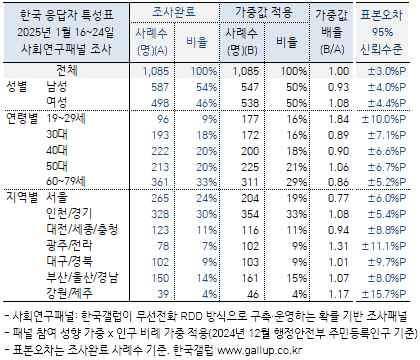
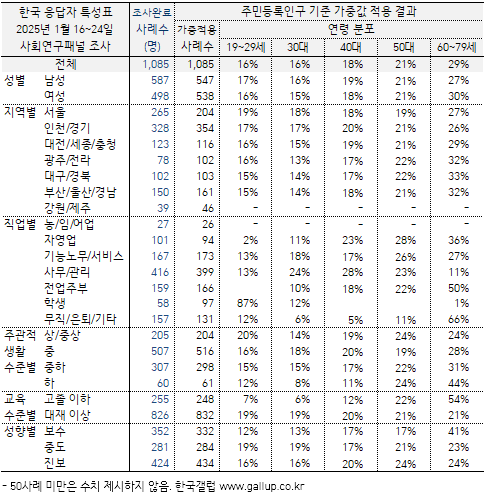
한국 응답자 특성표
!['신세계家' 올데프 애니, 컬럼비아대 졸업식 포착…"데이원 사랑해" [ALLDAY PROJECT, 화제성 올킬 혼성돌]](https://thumb.pann.com/tc_253x230/https://news.nateimg.co.kr/etc/cms/2026/05/20/1779245933_828.jpg)
![유연정, '갑자기' 노출한 王자 복근…군살 없는 한줌 허리 [걸그룹 이기적인 몸매]](https://thumb.pann.com/tc_253x230/https://news.nateimg.co.kr/etc/cms/2026/05/20/1779243498_463.jpg)

