전 대륙에서 시장조사와 여론조사를 하는 글로벌 네트워크 WIN(Worldwide Independent Network of Market Research)은 매년 건강, 환경, IT 등 여러 분야 현안에 관해 다국가 조사를 하고 있습니다. WIN World Survey 2024는 2023년 12월~2024년 2월 39개국 성인을 대상으로 했습니다. 지금까지 〈성평등〉 〈건강 상태〉 〈노인과 젊은이 나이〉 〈기후변화〉 〈가계 형편〉 주제를 다루었고, 오늘은 마지막 순서로 디지털 개인정보 보안과 신기술 관련 인식을 전합니다.
디지털 보안·신기술 관련 인식: WIN 다국가 조사
→ 한국+세계 조사 결과 파일 다운로드(PDF)
/ 세계 조사 개요
· 2023년 12월~2024년 2월 39개국 성인 총 33,866명 전화/온라인/면접조사(주제별 참여국 상이)
/ 한국 조사 개요
· 조사기간: 2024년 1월 24~30일
· 표본추출: 사회연구패널★에서 성·연령·지역별 층화 추출
(한국갤럽이 무선전화 RDD 방식으로 구축·운영하는 확률 기반 조사패널)
· 응답방식: 모바일조사(조사대상자에게 문자메시지 발송, 자기기입식 웹조사)
· 조사대상: 전국 만 19~79세 1,029명
· 표본오차: ±3.1%포인트(95% 신뢰수준)
· 문자 발송 대비 응답 완료율: 33.4%(총 3,078명 중 1,029명)
· 의뢰처: 한국갤럽-WIN 자체 조사
/ 조사 문항(아래 순서대로 질문)
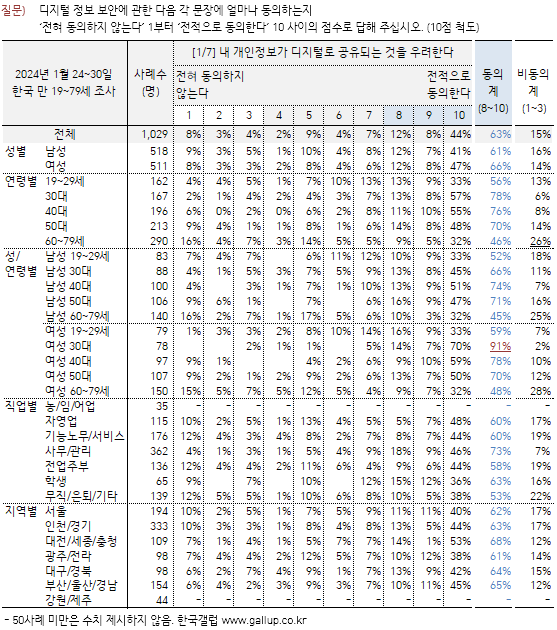
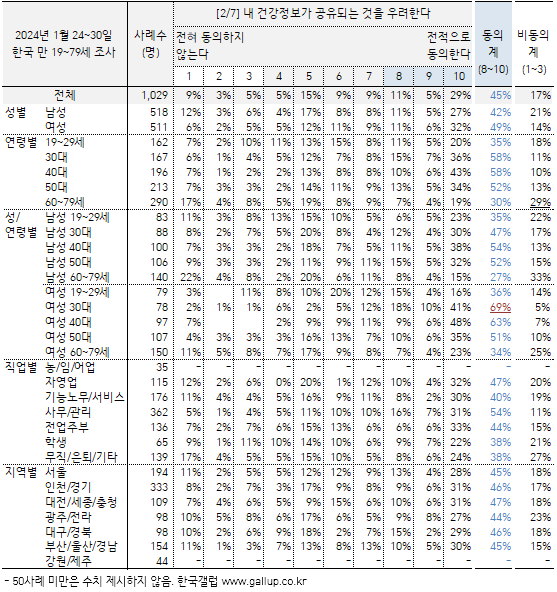
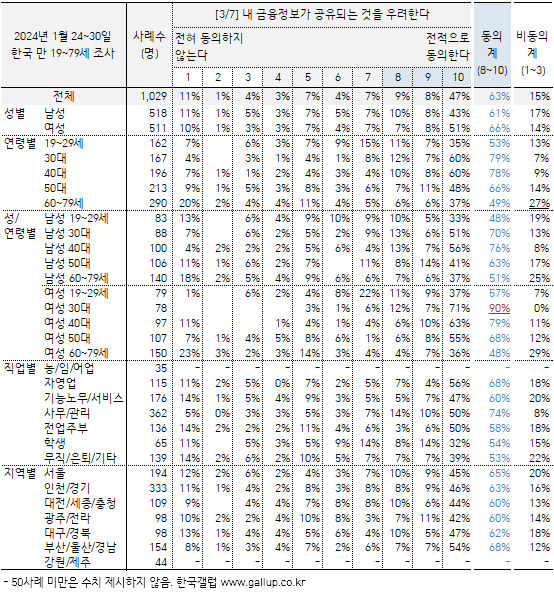
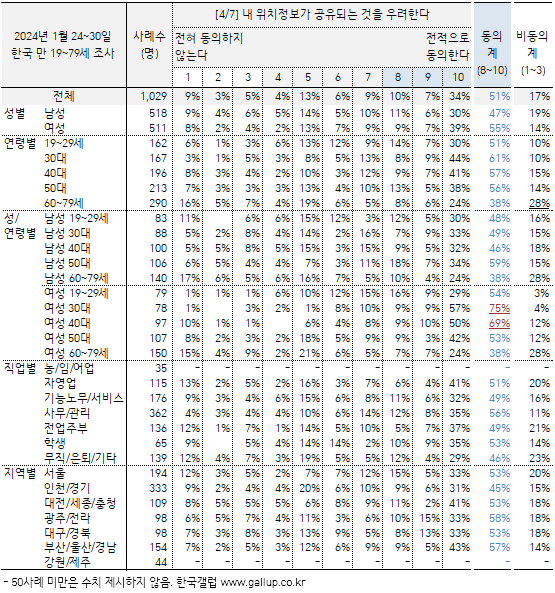
· 디지털 개인정보/건강정보/금융정보/위치정보 공유 우려 정도(이하 10점 척도)
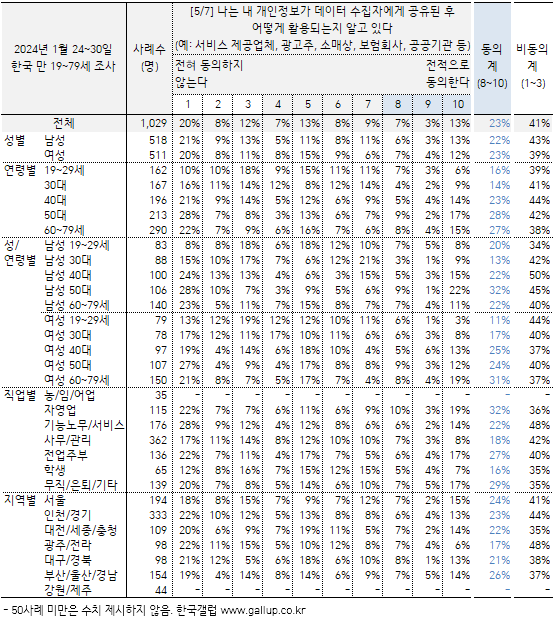
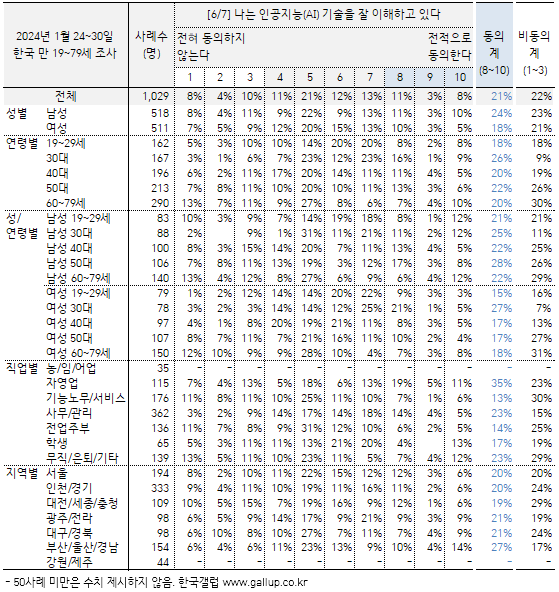
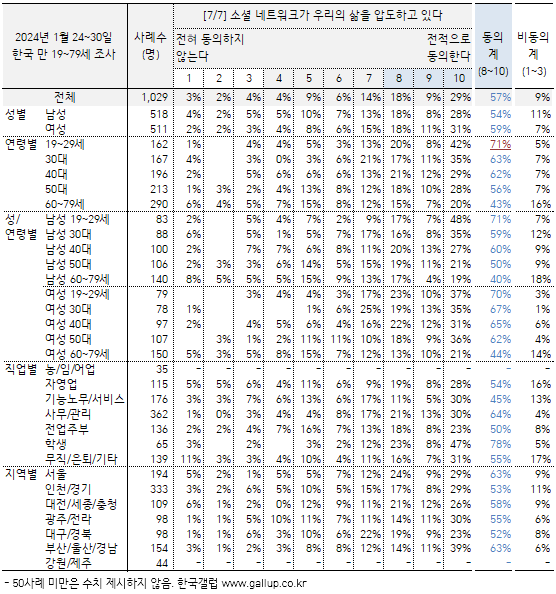
· 개인정보 활용 내역 인지 정도, 인공지능(AI) 기술 이해 정도, 소셜 네트워크 위력
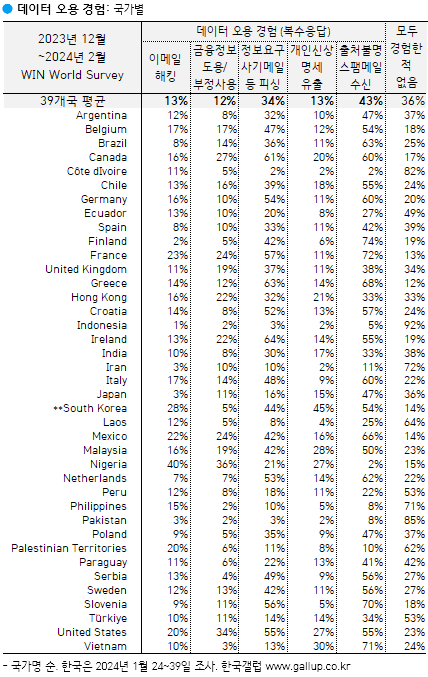
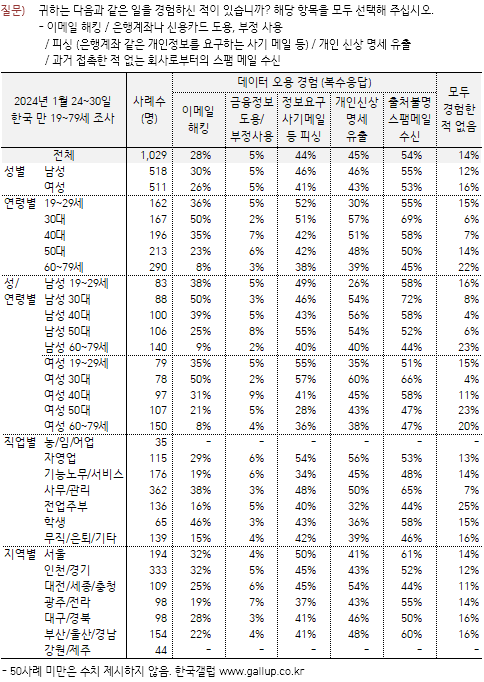
→ 데이터 오용 경험(복수응답)
→ 한국 교차집계표
→ (영문) WIN commentary
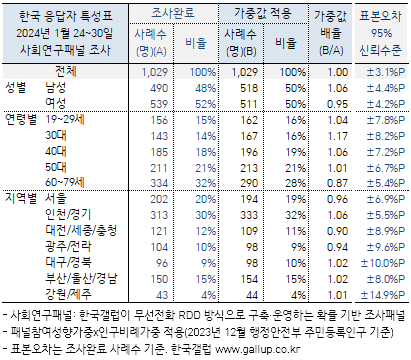
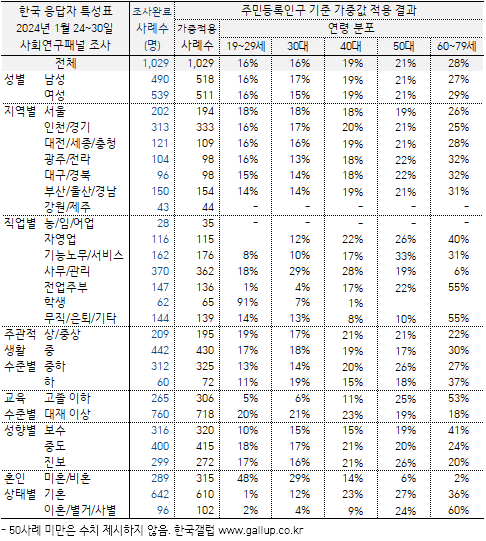
→ 한국 응답자 특성표
요약
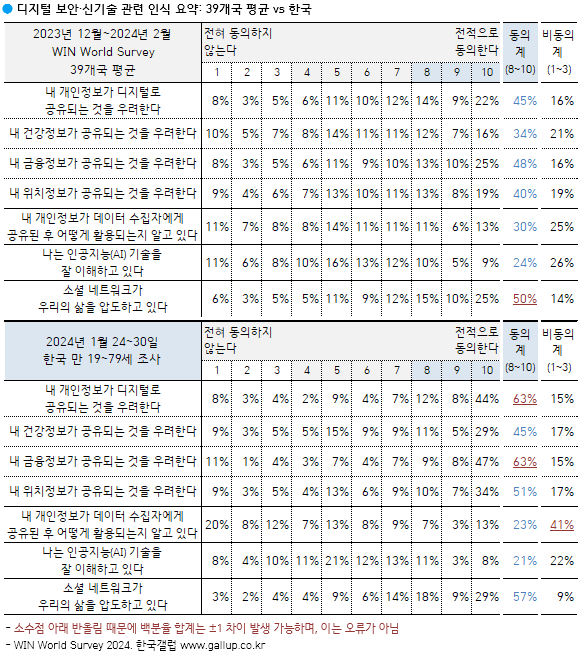
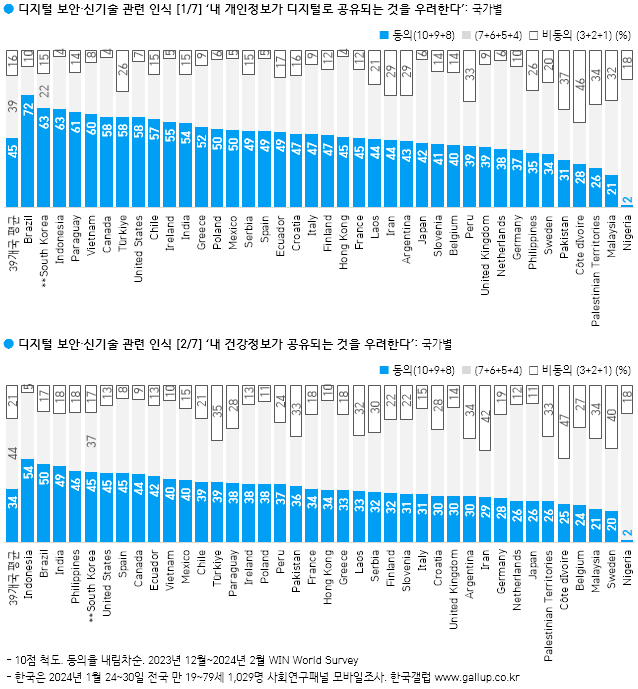
[디지털 개인정보 공유] 39개국 시민 45% '우려한다', '우려하지 않는다' 16%
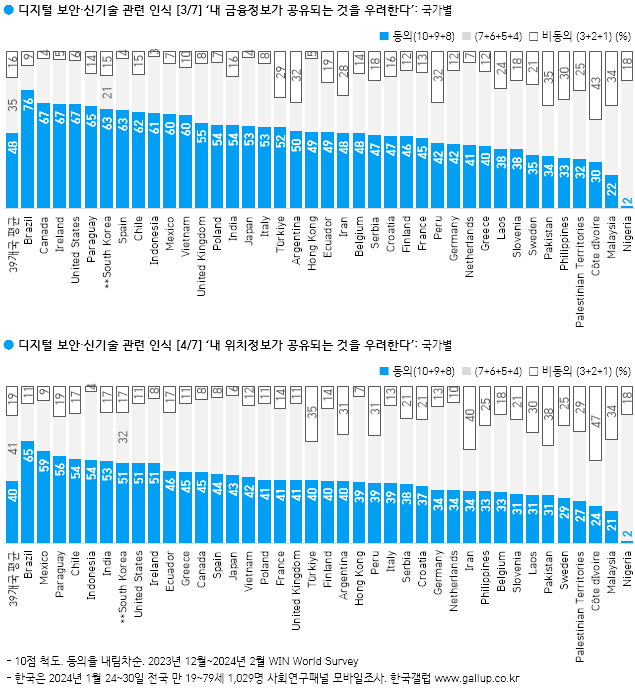
[유형별 공유 우려감] 금융정보 48%, 위치정보 40%, 건강정보 34%
· 한국, 정보공유 우려감 39개국 평균 크게 웃돌아
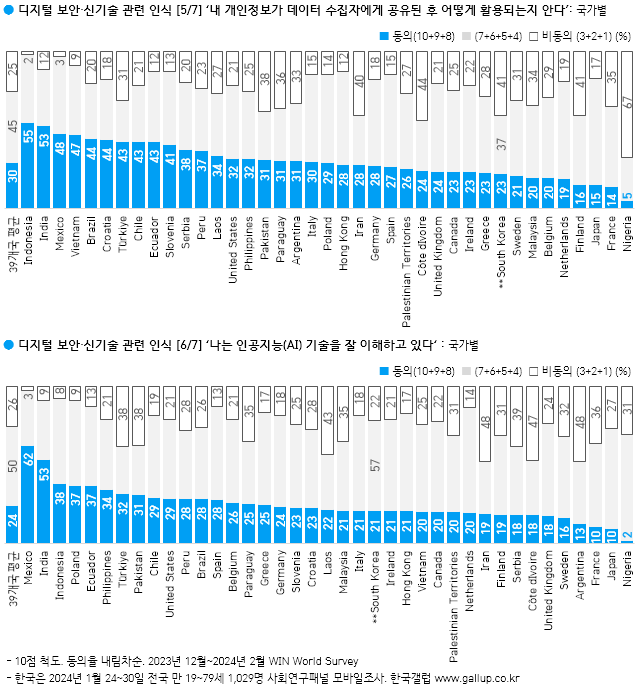
[개인정보 활용 내역 인지율] 39개국 평균 30%, 한국 23%
· 국가 간 디지털 보안 인식 차이는 인터넷 환경·법·규제 등 다른 맥락도 영향
[인공지능(AI) 기술] '잘 이해하고 있다' 39개국 평균 24%, 한국 21%
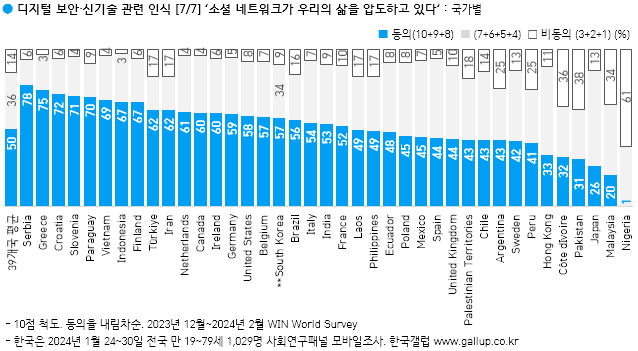
[소셜 네트워크] '우리의 삶을 압도하고 있다' 39개국 평균 50%, 한국 57%
· 저연령일수록 소셜 네트워크 위력 크다고 느껴
[데이터 오용 경험] 출처 불명 스팸메일 수신 43%, 피싱 시도 34%,
이메일 해킹 13%, 개인신상 명세 유출 13%, 금융정보 도용/부정 사용 12%
조사 결과
────────────
디지털 보안·신기술 관련 인식
────────────
───
한국 교차집계표
────────────
데이터 오용 경험
────────────
──────────────────
Understanding Digital Concerns
──────────────────
The Worldwide Independent Network of MR (WIN), the world’s leading independent association in market research and polling, today reveals findings from the Annual WIN World Survey on data collection, misuse and AI.
The WIN annual survey explores the views and beliefs of 33,866 people in 39 countries across the globe.
Concerns over the data shared online
As digital connectivity becomes increasingly integrated into daily life, concerns about privacy and data security are on the rise. The survey reveals that 45% of respondents are worried about sharing personal information online, while half of those surveyed believe that social networks have become overwhelming. These statistics underscore a significant global unease with the digital footprint we leave behind.
Countries such as Brazil, South Korea, and Indonesia exhibit the highest levels of concern regarding digital privacy. Conversely, Malaysia, Palestine, and the Ivory Coast report the lowest levels of concern.
Awareness of Data Handling Practices
The survey also uncovers varying levels of awareness regarding what happens to personal data once it is shared. Globally, the understanding of data handling practices remains relatively low, with notable regional differences. In Africa, only 16% of respondents feel they know what happens to their data, while awareness is slightly higher in Europe at 25%. The MENA region and APAC countries report awareness levels of 31% and 33%, respectively. The Americas show the highest confidence, with 36% of respondents expressing an understanding of data practices.
On a national scale, Nigeria shows the highest level of misunderstanding, with 67% of participants expressing confusion and only 5% claiming to understand the fate of their personal data. In contrast, Indonesia demonstrates the highest level of understanding, with 55% of respondents confident in their knowledge of data handling.
AI Understanding Varies by Age
The level of understanding of AI is fairly low across the globe. The countries with higher levels of understanding are the Americas and APAC at 28%, followed by Europe and the MENA region at 22% and lastly Africa at 11%.
Understanding of artificial intelligence appears to decline with age, showing a negative correlation between age and confidence in AI knowledge. Among 18–24-year-olds, 30% of respondents report having a good understanding of AI. However, this confidence gradually decreases with each successive age group: 28% for those aged 25-34, 26% for 35-44, 22% for 45-54, and 21% for 55-64. The lowest level of confidence is found among those aged 65 and older, with only 16% feeling they have a good understanding of AI.
Globally Overwhelmed by Social Media
Half of the people globally surveyed believe that social networks overwhelm their lives, with notable differences based on gender and education level. Women are more likely to feel this way, with 52% agreeing, compared to 48% of men. The sentiment is also stronger among those with higher education: 54% of respondents with a university degree and 51% of those with a master's or PhD agree that social networks have an overwhelming impact on their lives. Meanwhile, those with no education (41%) or lower levels such as primary (44%) or secondary (49%) report lower levels of concern.
Europe and the MENA region are the most overwhelmed with 57% of people feeling that way, followed by 51% in the Americas, 45% in APAC and 18% in Africa.
Richard Colwell,
President of WIN International Association, states:
“These findings highlight the diverse perspectives and concerns that are shaping our relationship with technology in 2024. As we navigate this digital landscape, understanding these global sentiments is crucial for fostering a more informed and secure online environment.”
───
한국 응답자 특성표
![수지, 발레로 완성한 명품 몸매…선명한 등 근육 [아이돌-수지, 날마다 리즈 갱신]](https://thumb.pann.com/tc_253x230/https://news.nateimg.co.kr/etc/cms/2026/06/07/1780812547_412.jpg)
!["왓츠인마이배"…아이브 안유진, 간식 가득한 반전 일상 [아이돌 아이브, 핫아이콘 탄생]](https://thumb.pann.com/tc_253x230/https://news.nateimg.co.kr/etc/cms/2026/06/07/1780812238_561.jpg)

